The Systems Only Seem Autonomous
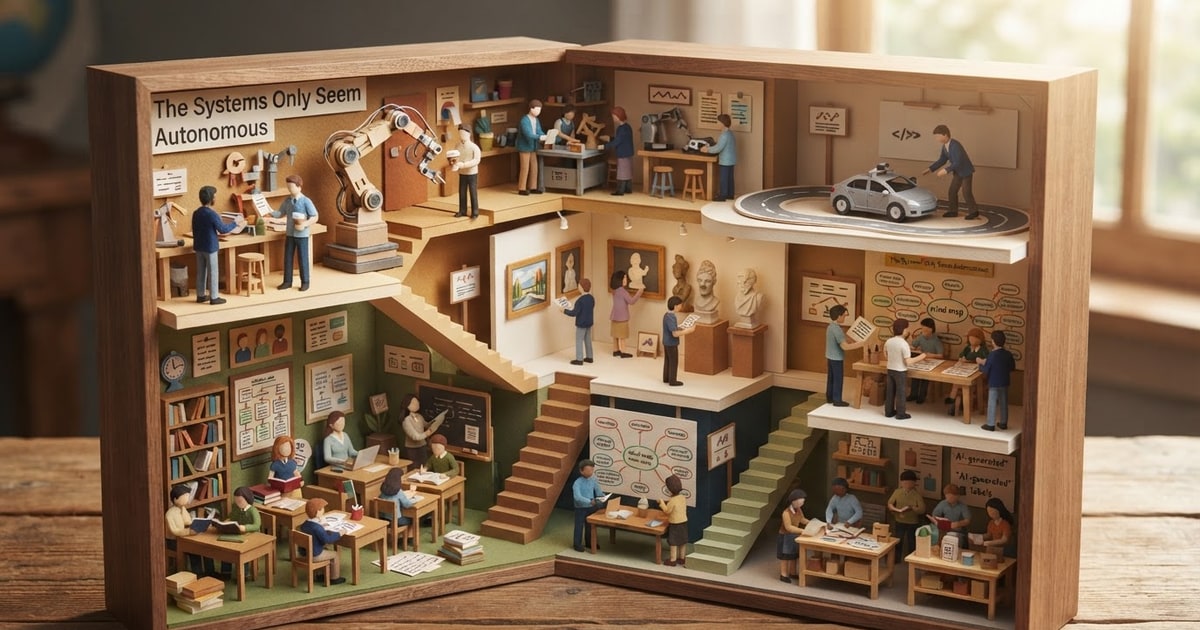
The Conversation's explainers on predictive processing, gallery products, and verification time sit alongside openDemocracy's literacy panic and AI-companion intimacy, Wired's world models, and Al Jazeera's Klein–Taylor episode on the AI bubble. Across them, AI's apparent thinking is assembled from finished human outputs and simulations, while teachers, workers, followers, and ad viewers absorb the hidden labor of checking errors and supplying meaning. The political-economic frame—disaster capitalism and platform dependence—sharpens the stakes: the systems look autonomous, but the burdens and authority remain distributed through institutions and markets.
The sources
9 sourcesThe reporting and analysis behind this edition, scored for Metaviews relevance where assessed.
| Source | Title | Relevance | Tier |
|---|---|---|---|
| The Conversation | Why AI cannot ‘think’ like humans do When a human picks up a coffee cup, we use predictive processing based on our understanding of the world. For a robot, picking up a cup requires extensive train… | 3/10 | Tier 4 |
| openDemocracy | The Right Words in the Right Order Cultural elites and educators of the Global North are now in an advanced state of panic surrounding reading, literacy, and the humanities generally. | 4/10 | Tier 4 |
| openDemocracy | The Illusion of Neutral Technology: Dr. Kate Devlin on AI Intimacy, Hidden Harms, and the Scientific Method As AI companions skyrocket in popularity and Silicon Valley tightens its grip on the tools shaping our future, are we losing our grip on human connection or jus… | 4/10 | Tier 4 |
| The Conversation | AI learns from the products of thinking, not thought itself. That’s a problem for machines – and for us When you walk through a gallery, admiring the paintings on the walls, what you are seeing are finished products. They are the result of countless hours of learn… | 4/10 | Tier 4 |
| Wired | World Models Will Soon Be Inescapable. Here’s What You Need to Know Moving AI from text to 3D space, world models simulate real-world physics to teach robots and autonomous cars how to navigate reality. | 6/10 | Tier 3 |
| The Conversation | Catching AI’s mistakes is a mental burden – and a drag on productivity Productivity gains from AI can be wiped out by the extra time workers must spend verifying whether the output is accurate and appropriate. Dragos Condrea/iStock… | 7/10 | Tier 4 |
| The Conversation | Influencers are supposed to influence us – so why are they asking us what they should do? Influencers ask their followers for their opinions on a range of topics, from their drink order to interior decorating. Samantha Mandato/dupe An influencer post… | 2/10 | Tier 4 |
| The Conversation | What does an ‘AI-generated’ label in advertising actually tell us? tadamichi/Shutterstock Advertising is about persuasion. It exists to sell products and lifestyles, ideas and stories. And while people have become pretty good a… | 4/10 | Tier 4 |
| Al Jazeera English | Fascism built the AI bubble. What will burst it? In the latest episode of Deja Vu, Naomi Klein and Astra Taylor examine the latest model of disaster capitalism. | 4/10 | Tier 3 |
Connections
1 groupsWhere these sources converge. Strength and confidence are computed from the evidence; warnings flag thin bridges that a shared theme alone cannot carry.