301: How Many Will Die This Summer?
The Conditions for a Heat Catastrophe
The warning signs don’t arrive as spectacle. They accumulate as constraints.
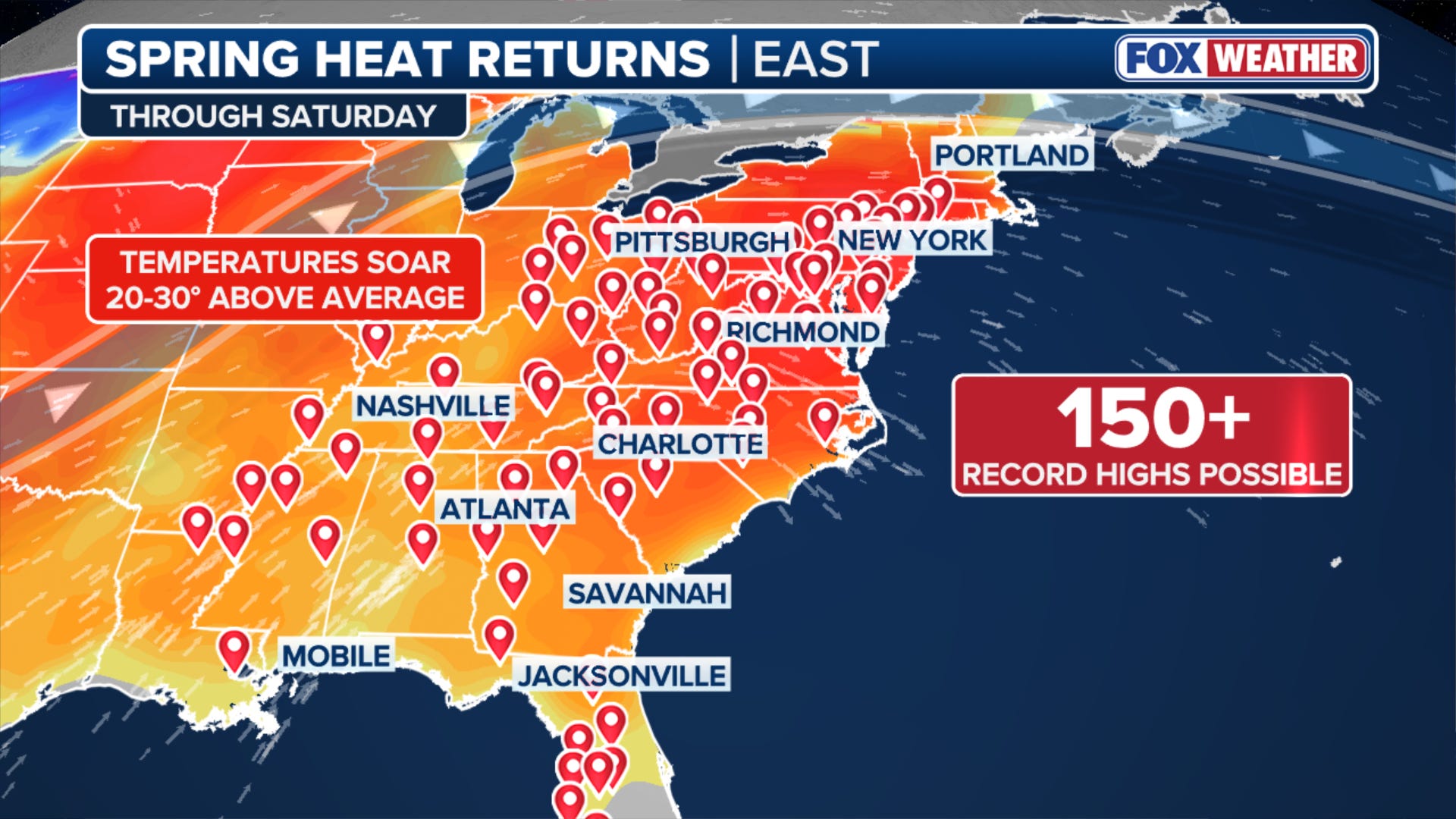
Early-season heat records fall across parts of the United States. Utilities signal rising demand. Electricity prices edge upward. At the same time, geopolitical friction around the Strait of Hormuz feeds into global energy costs. None of these developments are exceptional on their own. Taken together, they begin to shape how people will experience the next sustained heat event.
The question is not whether it will be hot. The question is how many layers of strain will coincide when it is.
Heat becomes dangerous when it exceeds the capacity of systems to absorb it. That capacity is unevenly distributed across infrastructure, markets, and social conditions. A mass fatality event does not require unprecedented temperatures. It requires alignment.
Start with duration. Multi-day heat with elevated nighttime temperatures removes the body’s ability to recover. This is well established in the epidemiology: mortality rises when nights stay warm, because exposure becomes cumulative rather than episodic.
Add humidity in regions where it limits evaporative cooling. The physiological burden increases quickly. What might be survivable in dry conditions becomes dangerous when the body cannot shed heat effectively.
Now place this over a built environment that stores heat. Older housing stock, poorly insulated apartments, urban heat islands with limited tree cover. These spaces convert external conditions into prolonged indoor exposure. The risk shifts from public space to private space.
At this point, access to cooling becomes decisive. Not in the abstract sense—air conditioning penetration in the United States is high—but in the practical sense of whether it is used continuously and early enough to prevent cumulative stress. This is where energy pricing enters the system.
Rising electricity costs, whether from increased demand, infrastructure investment, or load pressures associated with data centres, do not need to make cooling impossible to matter. They only need to introduce hesitation. A thermostat set a few degrees higher. Cooling delayed until later in the day. Intermittent use rather than sustained use. These are marginal decisions at the household level. At scale, they shape population exposure.
Overlay this with fuel cost volatility linked to chokepoints like the Strait of Hormuz, and the effect compounds. Energy becomes more expensive across the system, feeding into electricity markets and reinforcing the same behavioral adjustments.
So far, this is a high-risk heat event. It becomes a mass fatality scenario when system reliability is compromised.
The grid is the critical hinge. During sustained heat, electricity demand concentrates in time. If generation, transmission, or distribution falters—whether through equipment failure, wildfire interference, or intentional load shedding—cooling disappears precisely when it is most needed. Indoor environments heat rapidly. Vulnerability shifts from uneven to acute.
The populations most affected are not difficult to identify. Older adults, especially those living alone. People with chronic illness. Residents of congregate care facilities without robust backup systems. Low-income households in high-density urban areas. Outdoor workers who begin the event already physiologically stressed. Individuals dependent on electrically powered medical devices.
These are not marginal populations. They are structurally exposed populations.
Healthcare systems enter the scenario later, but they determine its severity. Heat does not present as a single condition. It exacerbates cardiovascular disease, renal stress, respiratory illness, and medication instability. Emergency departments see a rise in visits that can escalate quickly into capacity strain. If response times lengthen or care is delayed, mortality increases across multiple pathways, not just classic heat stroke.
Introduce a secondary stressor—most plausibly wildfire smoke—and the system tightens further. Outdoor air becomes hazardous, limiting behavioral adaptation. Indoor air quality degrades in buildings without filtration. The distinction between safe and unsafe space erodes.
None of these elements are hypothetical. Each has been observed independently. Heat waves with elevated nighttime temperatures. Rising heat-related mortality trends. Power outages affecting millions of customers annually. Wildfire smoke events affecting large population centers. Increasing electricity demand from data infrastructure. Energy price sensitivity among households.
The scenario emerges when they coincide.
This is where the current policy conversation remains inadequate. It treats each element as discrete.
Heat is framed as a public health messaging problem.
Electricity pricing is treated as a market issue.
Data centre demand is discussed as economic development.
Energy geopolitics is handled as foreign policy.
Housing quality is addressed, if at all, as a long-term affordability concern.
The reality is that these systems intersect during periods of stress. The outcome is not additive. It is multiplicative.
A prolonged heat event under conditions of high energy costs and grid strain transforms exposure from something people can manage into something they must endure. That shift—from agency to constraint—is where mortality concentrates.
What makes North America particularly exposed is not simply climate. It is the structure of reliance. Cooling is individualized. Backup systems are uneven. Housing quality varies widely. Healthcare access is fragmented. Infrastructure investment is inconsistent across regions. In such a system, resilience is not evenly distributed. It is purchased, maintained, or improvised.
The result is a geography of survival that becomes visible during extreme heat.
Some households maintain stable indoor climates regardless of external conditions. Others move through a sequence of thresholds: discomfort, stress, impairment, crisis. The difference is rarely temperature alone. It is access, timing, and continuity.
The summer ahead does not need to produce unprecedented temperatures to expose this structure. It only needs to sustain conditions long enough, and align them closely enough, that the margins disappear.
This is not a prediction. It is a description of how existing systems behave under pressure.
The policy question that follows is not how to warn people more effectively, but how to reduce the number of points at which failure can occur simultaneously. Not by addressing heat in isolation, but by recognizing that in practice, heat is how multiple systems fail at once.
That recognition tends to arrive after the fact.
The more difficult task is to hold it in advance, while the signals still appear separate.

@sarahabedimd on TikTok @sarahabedimd ♬ original sound - Sarah
Watch on TikTok