
280: We're Outside!
Posture, Power, and the End of Seated Politics
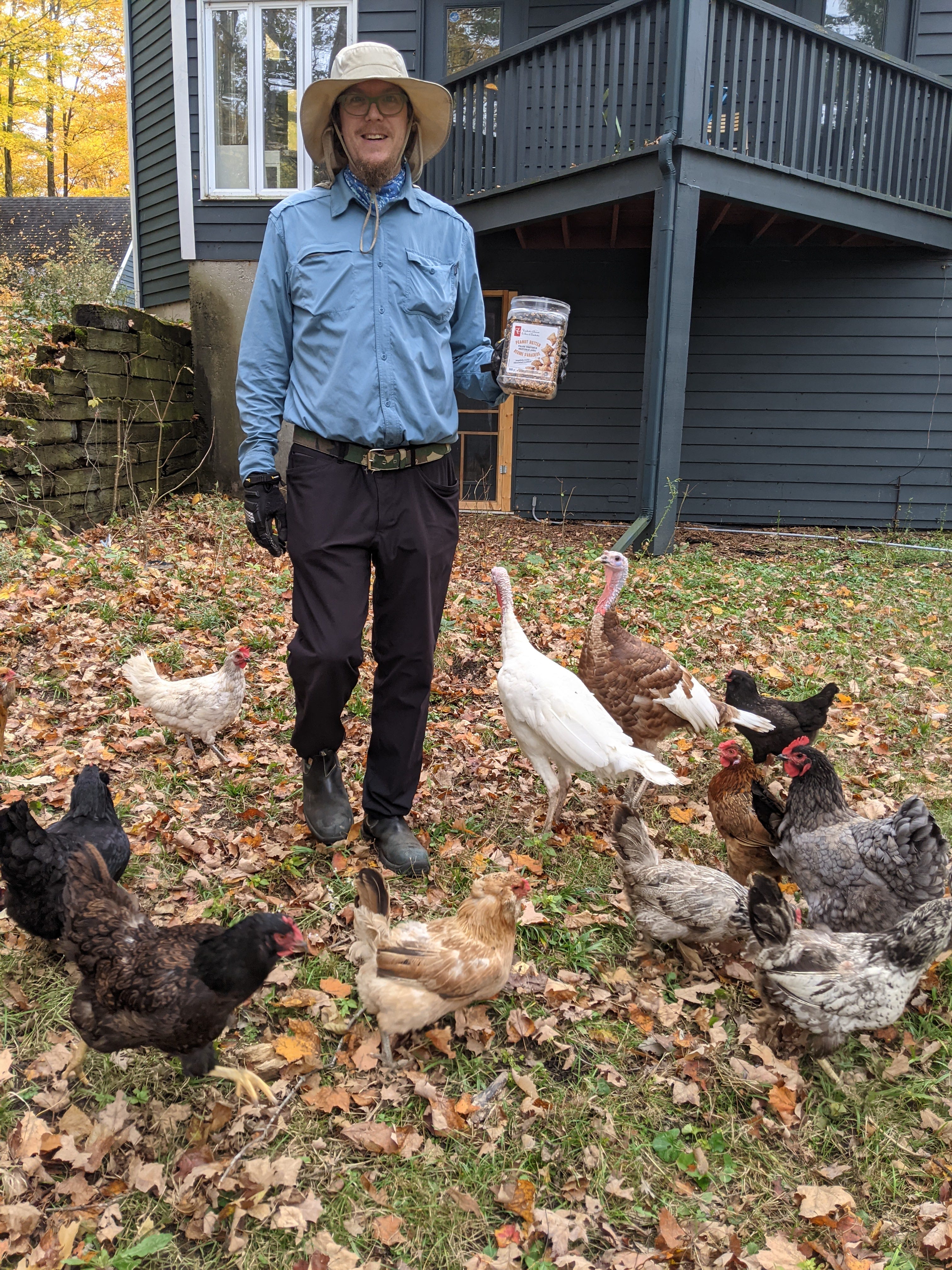
Power has a preferred posture.
Parliaments, boardrooms, courtrooms, classrooms: authority reliably organizes itself around chairs. Not for comfort, but for control. Sitting fixes bodies in place. It assigns roles. It stabilizes attention. It produces the sense that the world is ordered, bounded, and slow enough to govern from a room.
TL;DR: no meaningful social change comes from people who are sitting in chairs.
Sedentary living is killing us physically. That is well documented. But it is also killing us cognitively and politically. It narrows perception, dampens imagination, and trains us to accept stability as a default state rather than a manufactured one. It produces misery not only because bodies atrophy, but because agency does too.
Modern politics is a sitting profession. Politicians sit in parliament. Executives sit in meetings. Experts sit on panels. Even dissent is increasingly conducted from chairs: via screens, scheduled forums, fixed agendas. The function of these institutions is not transformation. It is preservation: protecting wealth, insulating power, and managing volatility so that the status quo can continue to pass as normal.
Sitting politics presumes a world of constants. But we do not live in one.
Thinking Moving Bodies
A growing body of research makes clear that cognition is not separable from posture or movement. Standing and walking alter attention, memory, creativity, and emotional regulation. They change how risk is assessed and how possibility is perceived.
Walking has been shown to significantly increase creative output compared to sitting, even in constrained environments. More importantly, the cognitive effects linger. Movement changes the mode of thought itself. This aligns with decades of work in embodied cognition showing that thinking is not confined to the brain. It emerges from the ongoing negotiation between body, space, and environment.
Sitting dampens that negotiation. It narrows the sensory field. It reduces the world to what is directly in front of us. It encourages abstraction without consequence, speech without motion, decision without exposure.
Standing and moving do the opposite. They situate thought in bodies and space. Balance becomes active. Direction matters. Fatigue matters. Proximity to others matters. The world reasserts itself as dynamic, uneven, and shared.
We are not the same people when we are upright.
The Myth of the “Able” Body
At this point, the argument risks a familiar trap: equating movement with virtue, or standing with moral clarity. Disability justice exposes why that framing fails.
Not all bodies can stand. Not all bodies can walk. Many bodies experience pain, instability, or exhaustion precisely because of environments designed around narrow assumptions of “normal” ability. Disability justice reminds us that exclusion is often architectural before it is ideological.
But this does not weaken our argument. It deepens it.
The problem is not sitting as an individual accommodation. The problem is a political system that treats sitting as the universal default: one that confuses immobility with seriousness and stillness with legitimacy.
Wheelchairs, mobility aids, pacing, lying down, and shifting position are not failures of participation. They are adaptations to a world that refuses to move with us. Disability justice insists that bodies already know variability. They already live without the illusion of constants. Pain, energy, access, and capacity fluctuate. Every day is conditional.
In that sense, disabled experience is central to the argument about dynamism.
A politics built around fixed seating assumes stable capacity, stable attention, stable time. A politics informed by disability understands that agency must be flexible, relational, and responsive to changing conditions. It demands environments that adapt to bodies, not bodies that contort themselves to fit furniture.
What needs to end is not sitting. What needs to end is seated politics and the assumption that legitimate deliberation requires immobilized bodies and standardized postures.
We’re Outside
In African American popular culture, “we’re outside” is not a lifestyle slogan. It is a declaration of presence. A refusal of managed interiors where power decides who belongs and how they must behave to be heard.
To be “outside” is to exit controlled spaces, whether architectural, social, and narrative. It signals visibility without permission. Movement without choreography. Gathering without seating charts.
Crucially, “outside” does not mean marching at protests. It means inhabiting political life as something lived, embodied, and contingent. Weather changes. Crowds shift. Voices overlap. Authority is not assigned by position but negotiated through presence.
This resonates deeply with disability justice, which has long insisted that access is not a checklist but a relationship. Being outside is not about a specific posture. It is about refusing environments that require bodies to disappear, flatten, or endure harm in order to participate.
Sitting politics asks people to leave their bodies at the door. Outside politics begins by acknowledging that bodies are already there.
Our economic and political systems are built on assumptions of stability: steady growth, predictable behavior, controllable risk. These assumptions are sustained by metaphors of stillness. Chairs make them feel real.
A seated meeting implies a fixed agenda. A fixed agenda implies knowable outcomes. Knowable outcomes imply control.
But the world we inhabit is defined by variables: climate volatility, supply chain fragility, technological acceleration, demographic shifts, ecological limits. Nothing is constant except change.
Disabled bodies live this truth with particular clarity. Energy fluctuates. Pain fluctuates. Access fluctuates. The fantasy of permanence is not merely false, it is exclusionary.
Standing, walking, rolling, shifting, and lying down are not solutions to complexity. But they train us to perceive it honestly. They keep variability visible. They make adaptation an active process rather than an abstract one.
Sitting encourages the fantasy that complexity can be managed from a distance.
That fantasy is collapsing.
Toward Moving Forms of Deliberation
The point is not to replace one orthodoxy with another. It is not that every decision must be made on the march, or that seriousness requires discomfort. It is that our default forms of meeting and deliberation are misaligned with the world they claim to govern.
We need civic forms that do not depend on immobilization as their organizing principle.
Walking assemblies. Standing councils. Mobile forums. Hybrid spaces that allow bodies to change position, pace, and mode without penalty. Deliberation that unfolds in time and space rather than pretending both can be frozen.
There are precedents: Indigenous governance practices that move with land and season, labor organizing rooted in shop floors rather than conference rooms, disability-led mutual aid spaces designed around rest, pacing, and care rather than endurance.
These are not aesthetic experiments. They are epistemic ones.
They change what can be known, who can speak, and how authority is distributed.
Chairs are not neutral. They teach us that power comes from fixed positions, that change is managed rather than lived, and that the safest way to engage the world is from a distance.
Movement that is understood broadly, inclusively, and justly interrupts that training. It reintroduces contingency. It re-embeds cognition in the body. It exposes authority to the conditions it claims to manage.
No meaningful social change comes from people who are sitting in chairs because sitting teaches us the wrong lessons about how the world works.
If authority feels brittle, disconnected, and incapable of responding to reality, it may be because it has mistaken stillness for seriousness.
The future will not be built seated.
We’re outside.
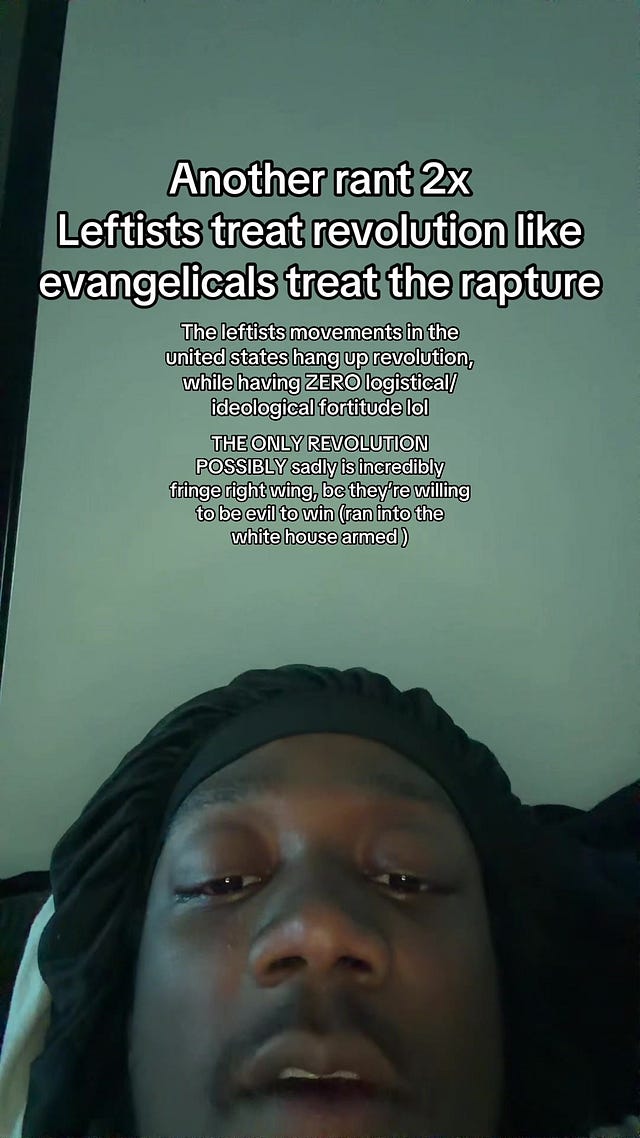
 Tiktok failed to load.
Enable 3rd party cookies or use another browser